Why Beginner Sailors Oversteer the Tiller — and the Fix That Makes Steering Click
Quick Answer: New sailors oversteer because they push the tiller in big, delayed corrections instead of small, constant ones. Hold the tiller lightly with a few fingers, make tiny adjustments before the boat drifts far, and watch the sail’s edge, not the bow, for feedback.
You push the tiller, the bow swings too far, you push it back, and now you’re carving an S-shape across open water instead of a straight line. Every beginner does this exact pattern — and the fix has almost nothing to do with strength or confidence.
Why does the boat swing so far past where I aimed?
Because a tiller correction takes a moment to show up in the boat’s heading, and new sailors react to that delay by pushing harder, not waiting. By the time the first push registers, you’ve already added a second, bigger one on top of it.
The boat isn’t ignoring you — it’s just slower to respond than your hand wants it to be.
What does a light grip actually change?
A tight fist locks your wrist into big, blocky movements. Holding the tiller with just your fingertips, almost like holding a pen, forces smaller, more frequent corrections — which is exactly what steering a straight line requires.
Most instructors will tell you this in the first lesson, but it doesn’t click until you physically feel the difference between a fist grip and a fingertip grip on the same tack.

Where should your eyes actually be while steering?
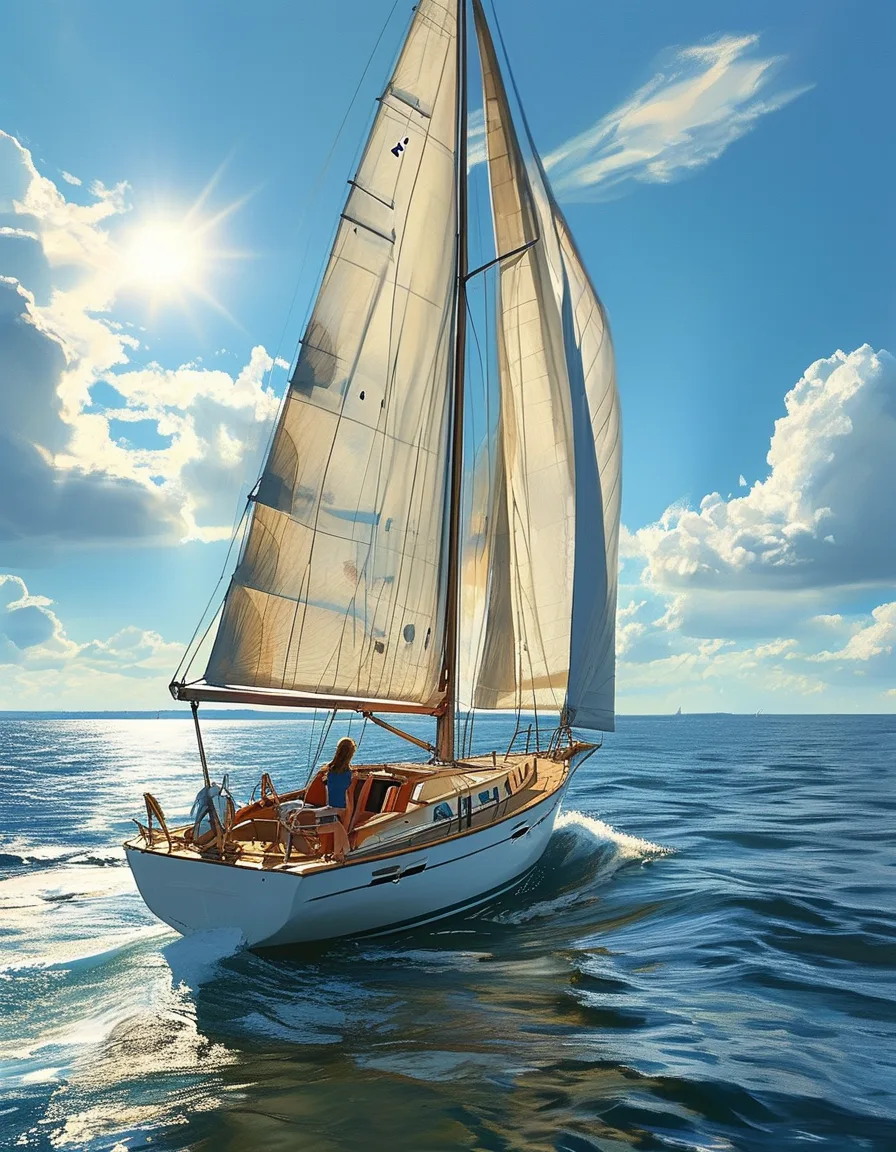
Not on the bow, and not on the horizon dead ahead. Watch the luff of the sail — the front edge, near the mast. The instant it starts to flutter, you’ve turned too far into the wind; the instant it goes fully round and full, you can head up slightly.
The sail tells you about your heading a full second or two before the compass or the horizon would. That head start is what stops the big, late corrections that cause the S-curve.
What Nobody Tells You About Tiller Direction
Here’s the part that trips up almost everyone at first: the tiller moves opposite to where you want the bow to go. Push the tiller left, the bow swings right.
Instructors usually mention it once, and it doesn’t stick under pressure — the first time you’re actually trying to avoid another boat, muscle memory reverts and you push the wrong way. The trick that finally makes it stick for most people: think of steering the stern, not the bow. Push the tiller toward the direction you want the back of the boat to swing, and the front follows naturally.
FAQ: Sailing Tiller Questions, Answered
How long does it take to stop oversteering?
Most people feel the difference within 2-3 outings once they consciously switch to a light grip and watch the sail instead of the bow — it’s a habit fix, not a skill you need months to build.
Should I steer differently in gusty wind?
Yes — in gusts, make your corrections even smaller and more frequent. Big corrections in shifting wind compound the zigzag instead of fixing it.
Is oversteering dangerous, or just inefficient?
Mostly inefficient and tiring — it slows the boat and wears out your arm — but exaggerated swings near other boats or a dock is where it becomes a real safety concern, so practice it in open water first.
TL;DR:
- Oversteering comes from big, delayed corrections, not weak steering skills
- Hold the tiller with fingertips, not a fist, for smaller adjustments
- Watch the sail’s luff for early feedback instead of the bow
- Remember: tiller moves opposite the bow — think ‘steer the stern’
Next time out, just try the fingertip grip for one tack. Most sailors feel the zigzag disappear almost immediately.
Keep Reading
This article is for general informational and styling purposes only. Fit, sizing, and product availability may vary.