Why Downwind Sailing Feels Calm Until You Turn Around
Quick Answer: The wind you feel on a boat is apparent wind - the combination of the true wind and the wind created by your own motion. Sailing downwind, your boat speed subtracts from the true wind, so a 15-knot breeze can feel like 9. Turn upwind and your speed adds to it, so the same 15 knots can feel like 20 or more. The weather did not change; your reference frame did. Judge conditions before you bear away, not after.
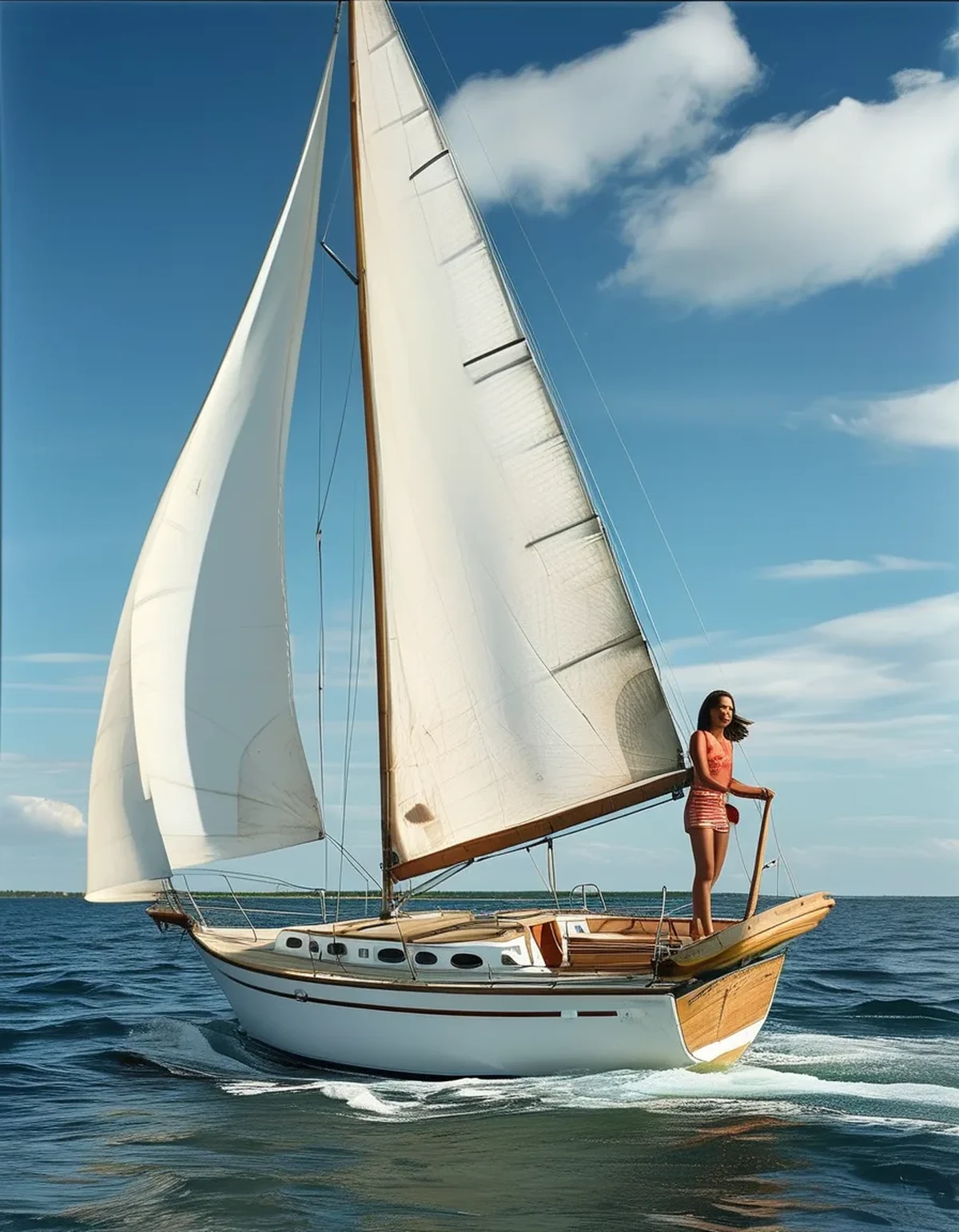
This is why so many small-boat sailors get caught out on the way home.
The run out felt easy because it was subtracting.
What is apparent wind, exactly?
The vector sum of the true wind and the wind of your own motion.
True wind is what a stationary observer measures. Apparent wind is what you feel on a moving boat, and it is the combination of true wind and the headwind your own forward motion creates.
Downwind, your motion subtracts. If the true wind is 15 knots from behind and you are making 6 knots, the apparent wind over the deck is roughly 9 knots. It feels genuinely mild because it genuinely is mild, on your boat.
Upwind, your motion adds. The same 15 knots on the nose with 5 knots of boat speed gives you 20 knots across the deck, and the boat heels accordingly.
The direction shifts too, not just the strength. Apparent wind always moves forward relative to true wind as you speed up, which is why the wind seems to come from further ahead the faster you go - and why fast boats sail with sails trimmed in even when travelling downwind.
This is not a subtlety; it is the central fact of sailing. A 15-knot day can present as 9 knots or 21 knots depending only on which way you point, and new sailors consistently misjudge conditions because they have only experienced one direction.
The practical version: the run out is always the flattering half.
Why does that make downwind deceptive?
Because everything that signals danger is muted, while the underlying force is unchanged.
The boat heels less downwind. Wind coming from behind pushes rather than pressing sideways, so the heel that normally tells you the wind is up simply is not there. Your primary intuitive warning system is switched off.
The sound drops away. Wind noise scales sharply with apparent wind speed, so a downwind leg is dramatically quieter. Quiet reads as calm.
The sea state looks different from behind. Waves travelling with you appear smaller and gentler than the same waves seen head-on, and the boat moves with them rather than through them.
And the boat feels stable and fast, which reads as being in control. Speed downwind is comfortable; speed upwind is work.
Meanwhile the true wind is building or not, entirely independently of how it feels. An afternoon sea breeze can rise several knots while you run downwind and you will barely notice - the apparent wind stays modest because your boat speed rises with it.
Then you turn. The turn converts a subtraction into an addition in a matter of seconds, and the same conditions that felt like a gentle afternoon become a genuine workload. This is the single most common way pleasant day sails become long ones.

How do I judge the true wind while sailing?
Four methods, none requiring instruments.
Look at the water, not at your boat. Surface texture is the most reliable visual indicator of true wind strength - ripples, small whitecaps, and streaks each correspond to fairly consistent ranges. Whitecaps generally start appearing around 10 to 12 knots.
Look at other boats and at shore. A moored boat shows true wind because it is not moving, and flags on shore do the same. This is why looking at the harbour before you leave is worth more than any feeling on the water.
Head up briefly to sample. Turning toward the wind for thirty seconds tells you exactly what the return leg will be like, and costs almost nothing. Doing this once an hour on a downwind sail is a genuinely good habit.
Check the forecast against the clock, not just the number. Afternoon sea breezes commonly build through the day and peak mid to late afternoon, so a 10-knot morning frequently becomes an 18-knot afternoon in coastal areas. A downwind morning followed by an upwind afternoon is the classic trap.
And use the simplest rule of all: sail upwind first. Beat out and run home - so the hard work happens while you are fresh and the conditions are known, and the return is the easy leg regardless of what the wind does. Nearly every experienced small-boat sailor follows this rule.
Myth vs Fact: Wind and Points of Sail
Myth: Downwind is the easy point of sail. Fact: Downwind is the most comfortable and, in strong wind, often the most technically demanding, with risks of accidental gybe and rolling that upwind sailing does not have. Comfortable and easy are not the same thing.
Myth: If it feels calm, it is calm. Fact: Apparent wind downwind can be 40 percent lower than true wind. How it feels is a function of your heading and speed, not the weather.
Myth: You cannot sail faster than the wind. Fact: Boats routinely exceed true wind speed on a reach, because apparent wind lets the sail keep generating force. Fast multihulls and foiling boats do this dramatically.
Myth: Sailing dead downwind is the fastest way to a downwind mark. Fact: For most boats, sailing a series of broad reaches at an angle is faster even though the distance is longer, because apparent wind is higher and the sails work more efficiently.
Myth: The wind is stronger out on the water because there is nothing to block it. Fact: That is true, and it is a separate effect from apparent wind - open water genuinely has more wind than a sheltered harbour. Both effects mean the harbour reading understates what you will find.
Myth: You will notice when the wind builds. Fact: Sailing downwind, you very often will not, because your boat speed rises with it and the apparent wind stays similar. This is precisely the mechanism this article is about.
FAQ: Apparent Wind Questions, Answered
How much difference does apparent wind actually make?
On a small cruising boat making 5 knots in 15 knots of true wind, downwind apparent is around 10 knots and upwind apparent is around 20 - a doubling between the two legs of the same trip in the same conditions.
Should I always sail upwind first?
For day sailing in a small boat, it is the sensible default. You do the demanding leg fresh, in known conditions, and keep an easy run home whatever the afternoon brings. Racing and passage planning have their own constraints, but for casual sailing this rule prevents a great deal of trouble.
Why does the wind seem to come from further ahead as I speed up?
Because your own motion adds a headwind component that shifts the apparent wind forward. The faster you sail, the further forward it comes - which is why fast boats trim their sails in even when sailing well off the wind.
TL;DR:
- Apparent wind is true wind combined with the wind of your own motion - it subtracts downwind and adds upwind.
- A 15-knot day can feel like 9 running and 20 beating, with no change in the weather.
- Heel, noise, and wave appearance are all muted downwind, so your intuitive warning signals are switched off.
- Judge true wind by water texture, moored boats, and a brief head-up - not by how the run feels.
- Sail upwind first and run home, especially when an afternoon sea breeze is likely to build.
Next time out, head up for thirty seconds an hour into a downwind leg. That is your whole return trip, previewed.
Keep Reading
This article is for general informational and styling purposes only. Fit, sizing, and product availability may vary.