Seasickness on Your First Sail: the Prevention Stack That Actually Works
Quick Answer: Seasickness is a sensory mismatch (inner ear says moving, eyes below deck say still) and prevention beats cure by a mile: prep with real sleep and a light non-greasy breakfast, take any medication before departure (once queasy, pills are largely too late), stay on deck midship where motion is least, watch the horizon, take the helm if offered (drivers rarely get sick), and treat going below deck to read as the single most reliable way to summon misery. Most people adapt within a day or two — and most first-sail seasickness traces to 2-3 avoidable mistakes.
The pre-sail anxiety conversation is always the same: ‘I’d love to come, but what if I get seasick?’ Fair question, wrong frame — seasickness isn’t a lottery; it’s a fairly mechanical process with a fairly mechanical prevention list, and first-timers who run the list usually spend the day discovering they’re fine.

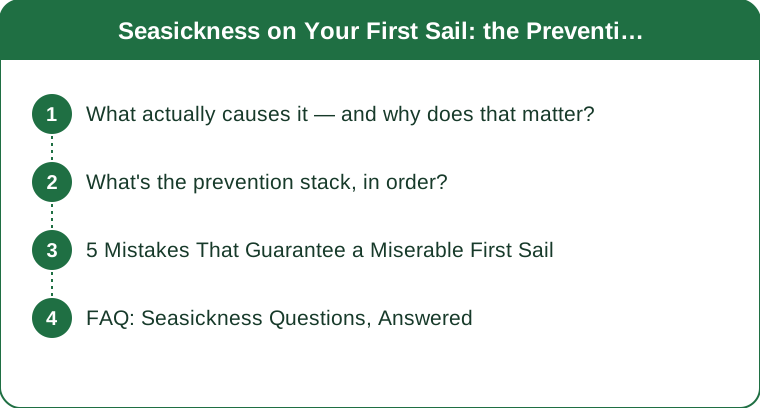
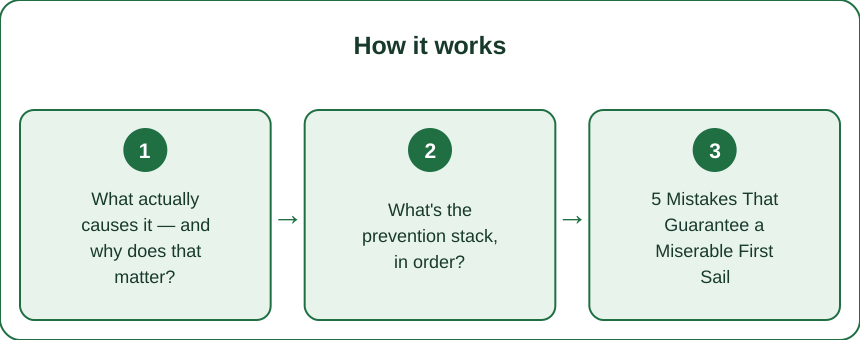
What actually causes it — and why does that matter?
The mechanism is sensory conflict: your inner ear (vestibular system) reports the boat’s motion while your eyes — especially fixed on close, boat-stationary objects like a phone, a book, or a cabin wall — report stillness. The brain, receiving contradictory motion reports, responds with the nausea cascade.
Why the mechanism matters practically: every effective countermeasure is a conflict reducer —
- Horizon-watching gives the eyes a motion reference that agrees with the inner ear: conflict shrinks.
- Going below deck maximizes conflict (full ear motion, zero visual motion) — hence its reputation as the seasickness accelerator.
- Taking the helm works the same way driving a car prevents carsickness: the controlling brain predicts the motion, and predicted motion generates far less conflict.
- Midship positioning reduces the raw input — the bow and stern travel the most vertical distance in waves; the boat’s center pivots least.
One more mechanism note that reframes the whole topic: habituation is real and fast — the brain recalibrates within hours-to-days of exposure (‘getting your sea legs’ is literal neural adaptation), which is why day two is nearly always better and why one bad afternoon doesn’t predict your sailing future.
What’s the prevention stack, in order?
Before the trip:
- Sleep properly — fatigue is a documented seasickness multiplier; the sleep-deprived stomach folds first.
- Eat light and non-greasy 1-2 hours pre-departure — empty stomachs and greasy breakfasts both underperform; plain toast, bananas, oatmeal territory. Skip the boozy send-off dinner and the morning-of coffee overdose (both dehydrate and irritate).
- Medication timing is everything: if you’re using motion-sickness medication (the OTC classics, or patches via a clinician), the dose happens before symptoms — commonly 30-60 minutes pre-departure or per label; once nausea starts, absorption and effectiveness drop steeply. Drowsiness trade-offs and personal medical situations are pharmacist/clinician conversations. This is general information, not medical advice.
On the water:
- Stay topside, midship, facing forward — fresh air plus the least-motion seat plus a forward view.
- Horizon as home base: eyes return there between everything.
- Ask for the helm — genuinely, skippers love giving newcomers a turn, and it’s the strongest single intervention on the list.
- The phone rule: below-deck scrolling is the modern era’s great seasickness generator — texts can wait for the mooring.
- Ginger, if you like it (candied, tea, capsules): modest evidence, low cost, pleasant placebo-or-better.
If queasiness starts anyway: topside immediately, horizon, fresh air on the face, small sips of water, and tell the skipper early — course and sail adjustments can genuinely smooth the ride, and no good skipper minds.

5 Mistakes That Guarantee a Miserable First Sail
1. Going below to ‘lie down for a minute.’ The cabin is where queasy goes to become wretched — the sensory conflict maxes exactly when you’re most vulnerable. Lying down happens topside, eyes closed or on the sky, if it happens at all.
2. The big greasy breakfast (or the empty-stomach bravado). Both extremes lose; the light middle wins. Related: heavy alcohol the night before starts the day pre-nauseated and dehydrated.
3. Taking the pill when you feel sick. The medication window was an hour before the dock — mid-nausea dosing is mostly theater. Calendar the dose with the departure time.
4. Heads-down tasks in the first hour. Reading charts, rummaging bags, phone-scrolling — the adaptation period wants your eyes on the world while your brain calibrates. Give it the first hour; the sea legs arrive faster.
5. Announcing doom and monitoring your stomach. Anxiety genuinely worsens motion sickness (the gut-brain channel runs both ways) — the passenger scanning for nausea finds it sooner. Occupation is protection: take a line, take the helm, take the lookout job. Busy sailors famously don’t have time to be sick.
The pattern behind all five: seasickness exploits idle, indoor, unprepared passengers — and the fix list doubles as the recipe for actually enjoying sailing.
FAQ: Seasickness Questions, Answered
Are the wristbands worth wearing?
Acupressure bands: evidence is mixed-to-modest, cost and risk are near zero — reasonable to wear, unreasonable to rely on as the whole plan. They stack politely on top of the real interventions; they don’t replace the horizon or the medication timing.
I got carsick as a kid — am I doomed on boats?
Correlated but not deterministic — motion-sensitive people should simply run the full stack seriously (medication timed properly, topside discipline, helm time) rather than winging it. Many carsick-prone people sail comfortably prepared, and habituation still works on sensitive systems; it just appreciates the head start.
When is it more than seasickness?
Ordinary seasickness improves with the interventions and resolves after landing (occasionally with brief ‘land-sickness’ echoes). Symptoms that are severe, persist well beyond the trip, involve vertigo attacks unrelated to travel, or come with hearing changes belong to a clinician — inner-ear conditions can masquerade as ‘just bad seasickness.’ And on multi-day passages, inability to keep fluids down is a real dehydration concern that warrants the skipper’s and, if needed, medical attention. This is general information, not medical advice.
TL;DR:
- Seasickness = inner ear vs eyes disagreement; every fix is a conflict reducer — horizon, topside midship, helm time
- The stack: real sleep, light breakfast, meds BEFORE departure, first hour heads-up, phone in the pocket
- Below-deck retreat is the accelerator; occupation (lines, lookout, helm) is underrated protection
- Adaptation is fast — day two is better, and one rough afternoon predicts nothing
The fear of seasickness has sunk more sailing invitations than seasickness ever has — run the list and go find out which passenger you are. This is general information, not medical advice.
Keep Reading
This article is for general informational and styling purposes only. Fit, sizing, and product availability may vary.