Why Beginner Sailors Carry All Their Tension in Their Shoulders Instead of Their Core
A day of sailing leaving the shoulders and forearms exhausted is an extremely common beginner experience, and it usually comes down to gripping the tiller and sheet lines with tense arms and shoulders instead of letting the legs and core absorb the boat’s movement.

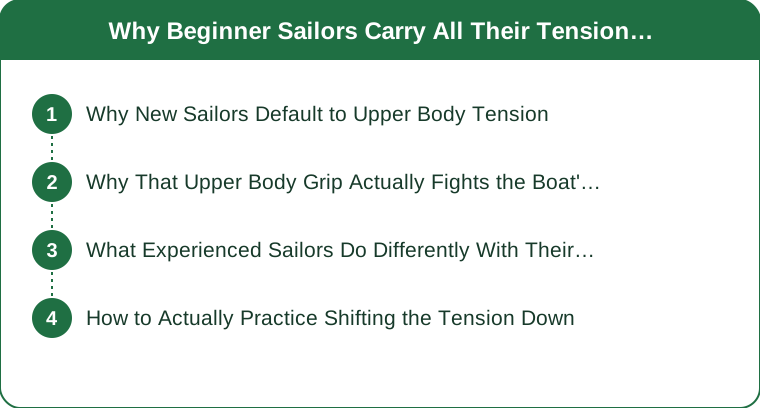
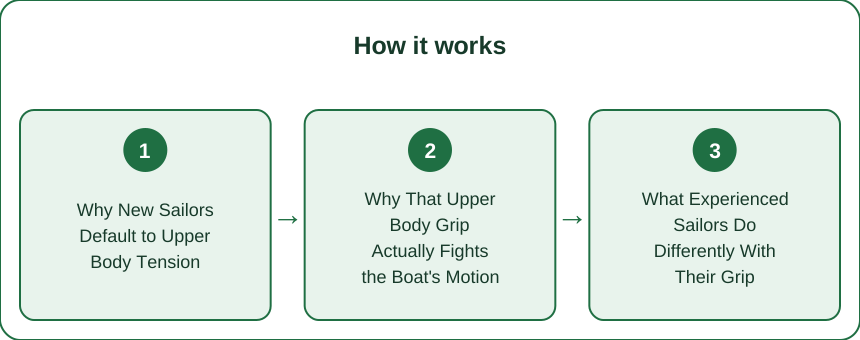
Why New Sailors Default to Upper Body Tension
The instinct: an unfamiliar, moving surface naturally triggering a whole-body brace response, and the arms and shoulders being the most immediately controllable muscles, which makes gripping lines and the tiller tightly feel like the safest response.
Why That Upper Body Grip Actually Fights the Boat’s Motion
The mismatch: a boat’s roll and pitch being absorbed most efficiently through flexible knees and an engaged core that moves with the boat, while a rigid, tense upper body fights against that motion and transfers all the strain into the shoulders and forearms instead.

What Experienced Sailors Do Differently With Their Grip
The contrast: experienced sailors typically holding the tiller and sheet with a light, relaxed grip, using small wrist and forearm adjustments rather than constant muscular tension, while letting bent knees absorb the boat’s larger movements.
How to Actually Practice Shifting the Tension Down
The practical fix: consciously checking shoulder tension every few minutes during a sail and deliberately relaxing the grip while bending the knees slightly to absorb boat movement instead, and the frame (a boat’s motion is absorbed most efficiently through the legs and core, not a tense upper body grip — deliberately relaxing the shoulders and engaging the knees is what actually reduces the exhausted, sore feeling after a day of sailing.)
A day of sailing leaving the shoulders and forearms exhausted is an extremely common beginner experience, and it usually comes down to an unfamiliar, moving surface triggering a whole-body brace response, with the arms and shoulders being the most immediately controllable muscles, which makes gripping lines and the tiller tightly feel like the safest response. A boat’s roll and pitch are absorbed most efficiently through flexible knees and an engaged core that moves with the boat, while a rigid, tense upper body fights against that motion and transfers all the strain into the shoulders and forearms instead, which is why experienced sailors typically hold the tiller and sheet with a light, relaxed grip and let bent knees absorb the larger movements. Consciously checking shoulder tension every few minutes during a sail and deliberately relaxing the grip while bending the knees instead is what actually reduces the sore, exhausted feeling that new sailors associate with a day on the water.
Keep Reading
This article is for general informational and styling purposes only. Fit, sizing, and product availability may vary.