The Seat You Choose on a Sailboat Predicts Whether You Get Seasick
Quick Answer: Sitting near the center of the boat and facing the horizon reduces seasickness risk more than any medication alone, since it minimizes the sensory mismatch between what your eyes and inner ear feel.
You took the motion sickness pill an hour before, and you’re still green by the second tack. The seat you picked might be working against you.

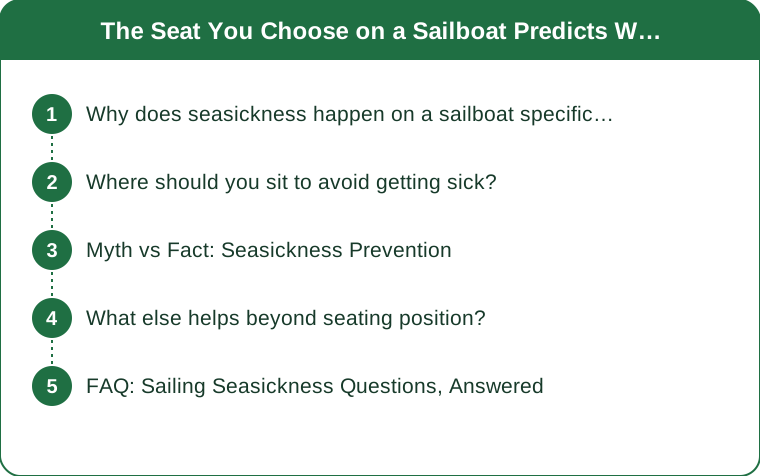
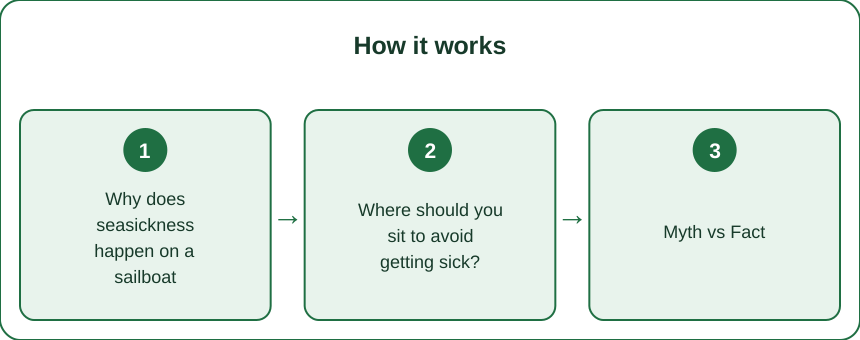
Why does seasickness happen on a sailboat specifically?
Seasickness comes from a mismatch between what your inner ear feels (motion) and what your eyes see — if you’re below deck or staring at your phone while the boat rocks, your eyes report stillness while your body feels movement. That conflict is what triggers nausea, more than the motion itself.
Sailboats add rolling and heeling (tilting) motion that’s less predictable than a car or plane, which is why some people who never get carsick still struggle on a sailboat.
Where should you sit to avoid getting sick?
Near the center of the boat, at deck level, facing forward toward the horizon — this position experiences the least amplified motion (the bow and stern swing more dramatically) and gives your eyes a stable reference point that matches what your body feels.
Avoid the cabin below deck if you’re prone to sickness; the lack of a horizon view down there is often what tips people over into feeling ill.

Myth vs Fact: Seasickness Prevention
Myth: Seasickness pills alone are enough. Fact: medication helps but works best combined with smart positioning — pills reduce sensitivity, they don’t eliminate the sensory mismatch causing symptoms.
Myth: You just have to tough it out once you’re sick. Fact: getting fresh air and refocusing on the horizon can meaningfully reduce symptoms even after nausea starts, it’s not an all-or-nothing state.
What else helps beyond seating position?
Eat a light meal before sailing rather than going out on an empty or very full stomach — both extremes increase nausea risk. Stay hydrated, and avoid alcohol before or during the sail, since it worsens the inner-ear disruption.
Ginger (candy, tea, or capsules) has real evidence behind it for mild nausea prevention, and it’s a good low-risk addition alongside good seating and fresh air.
FAQ: Sailing Seasickness Questions, Answered
How long does it take to get sea legs?
Most people adapt within a few hours of consistent exposure on a single outing, and repeated sailing trips build tolerance over weeks.
Does looking at the horizon really help mid-sickness?
Yes — refocusing on a stable, distant point recalibrates the mismatch between your eyes and inner ear and can reduce symptoms within minutes.
Is it worse to sail in rough water as a beginner?
Yes, choppy conditions amplify the motion mismatch — if you’re new, choose a calm-day outing first to build confidence and tolerance before rougher conditions.
TL;DR:
- Seasickness comes from a mismatch between what your eyes see and your body feels
- Sit centered on deck, facing the horizon, not below deck
- Combine smart seating with a light meal and hydration
- Ginger and fresh air help even after symptoms start
This is general information, not medical advice — talk to a doctor about prescription options if seasickness is severe or recurring.
Keep Reading
This article is for general informational and styling purposes only. Fit, sizing, and product availability may vary.