Sailing Fitness: The Strength, Balance and Grip That Make You Better Crew
Sailing looks like sitting and is actually intermittent athletics — the winch grinding, the rail hiking, the foredeck scramble — and the fit sailor is the useful sailor. The sailing-fitness guide: the demands, the land program and the body-management extras.

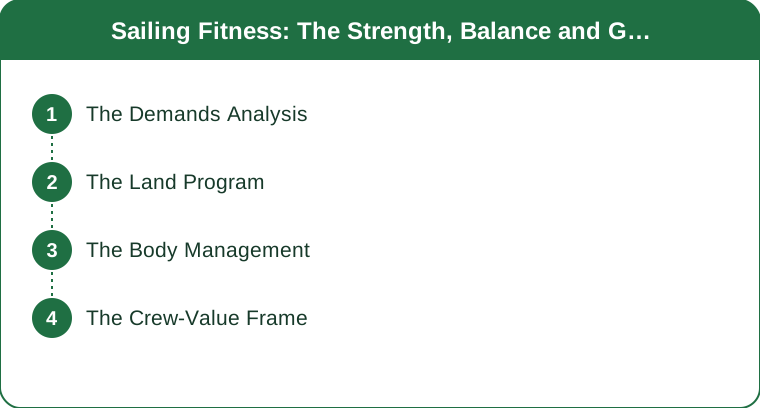
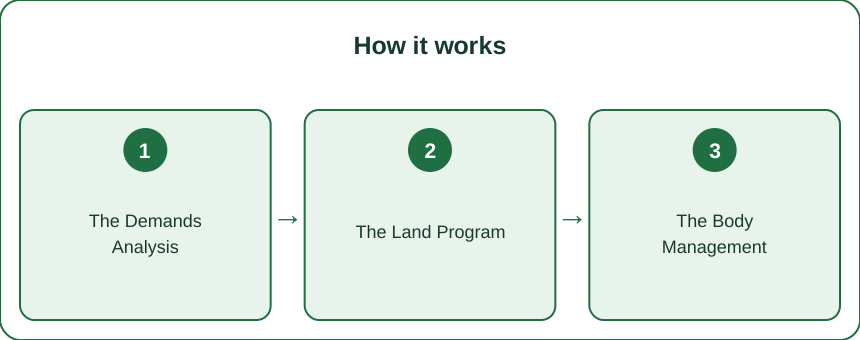
The Demands Analysis
What the boat asks: the grip-and-pull core (the lines hauled and winches ground — the grip endurance from the grip doctrine being sailing’s signature currency; the rope-burn-and-fatigue reality of a windy day), the hiking demand (the rail-sitting isometric — the leg-and-core hold that dinghy sailors know as pain; the keelboat’s gentler version), the balance-on-moving-ground skill (the deck as an instability trainer from the balance doctrine — the sea legs being trainable proprioception), the burst-and-wait profile (the tacking scrambles between long calms — the intermittent readiness; the interval-shaped sport per the interval doctrine), the low-position work (the cockpit crouch and the foredeck crawl — the mobility from the mobility doctrine keeping you useful), and the endurance base (the long race days and passages — the all-day energy from the zone-2 doctrine; the sun-and-motion fatigue multiplying everything).
The Land Program
Training for the season: the grip block (the dead hangs, farmer carries and towel rows from the grip doctrine — the winch-winter that shows up in spring; the twice-weekly dose), the pull emphasis (the rows and pull-up progressions from the pull doctrine — the line-hauling strength; the two-to-one pull-to-push ratio serving sailors doubly), the core-and-hiking prep (the planks, hollow holds and wall sits — the hiking bench improvisation: the feet-hooked sit-back holds for the dinghy-bound; the isometric endurance from the isometric doctrine), the balance work (the single-leg and unstable-surface training from the balance doctrine — the eyes-on-horizon variations that mimic deck work), the squat-and-lunge foundation (the low-position strength from the leg doctrine — the deep-squat comfort for the cockpit), the season periodization (the winter build, the spring sharpening, the season maintenance from the periodization doctrine — the sailing itself becoming the training in season), and the minimal version (the two weekly sessions covering grip-pull-core — the minimal doctrine afloat).

The Body Management
The sailor’s extras: the seasickness protocols (the horizon-watching, the helm-taking and the fresh-air rules — the prevention beating cure; the medication-timing conversation from the medical doctrine; the acclimatization reality: most stomachs settling with exposure), the sun system (the water’s double UV from the sun doctrine — the sailing-specific kit: the UPF layers, the strap-secured hat, the reef-safe reapplication; the glare-and-eyes: the polarized-and-leashed sunglasses), the hydration discipline (the wind-and-salt dehydration that sneaks — the bottle-per-watch rule from the hydration doctrine; the sun-plus-dehydration being the afternoon-mistake factory), the hands care (the rope-callus management and the sailing-gloves decision — the tape kit for the raw days per the hand-care doctrine), the layering craft (the on-water temperature swings from the layering doctrine — the spray-and-wind shell; the cold-water dressing rules from the safety doctrine), and the recovery notes (the post-sail stretch for the hiked backs — the grip released with the forearm stretches from the recovery doctrine).
The Crew-Value Frame
Why fitness makes you wanted aboard: the useful-crew economics (the boats always needing reliable, fit crew — the fitness as your ticket into the racing scene per the crew doctrine; the grinder who lasts being remembered), the safety dividend (the strength margin when weather turns — the crew-overboard and heavy-weather scenarios drawing on reserves; the fitness as seamanship per the safety doctrine), the skill-fitness synergy (the tired brain making poor calls — the endurance protecting the decision-making late in the day), the age-and-access note (the sailing being a lifetime sport — the masters crews and the fitness that extends the sailing decades per the masters doctrine), and the closing pitch (the winter gym block converting to summer confidence — the boat felt differently when the body is ready; the crew spot earned twice: once ashore, once afloat; the wind, met with capable hands). Grip and pull all winter, hold the hike, manage the sun: the crew, made valuable.
Sailing is intermittent athletics: train grip (dead hangs, carries), pulling strength at 2:1 over pushing, and hiking-bench core holds through winter. Aboard, manage the real killers — sun doubled by water, sneaky dehydration and seasickness — and fitness is what makes you wanted crew.
Keep Reading
This article is for general informational and styling purposes only. Fit, sizing, and product availability may vary.