Learning to Sail as an Adult: Wind, Water and One Good Class
Quick Answer: The fastest way to learn sailing as an adult is a weekend intro course at a community sailing center, on a small dinghy. Two days typically covers rigging, steering, points of sail, tacking, and a capsize drill — enough to sail a small boat yourself. Expect to pay far less than you assume, roughly in the range of a month or two of gym membership, and to need no prior experience or equipment.
Sailing looks like it comes with a heritage watch and a grandfather who owned a boat.
It doesn’t. Community sailing centers teach complete beginners every single summer weekend, on boats that don’t care who you are, and the wind has never once checked anyone’s pedigree.

How Do You Actually Start Sailing?
Find a community sailing center. Most waterfront cities have one, and they exist specifically to teach beginners. Search your city plus “community sailing” or “sailing center.” They’re generally nonprofit, generally cheap, and generally staffed by people who are delighted you asked.
Take a weekend intro course on a small dinghy. Two days, typically 6–8 hours each. You’ll cover rigging the boat, steering, reading the wind, tacking and jibing, right-of-way basics, and — yes — a capsize recovery drill, which is far more fun than it sounds and removes the fear that would otherwise sit under everything you do.
Start small, deliberately. New sailors often assume bigger boats are easier. The opposite is true for learning. A big keelboat absorbs your mistakes silently; a dinghy tells you about them within about two seconds. That instant feedback loop is why small boats are the right classroom.
Then join the club and use their boats. Most centers let members take out boats after certification. This is the part nobody expects — you can sail regularly without owning anything.
What to bring: closed-toe shoes with grip, a change of clothes, sunscreen, sunglasses with a strap, and a water bottle. The center supplies the boat and the life jacket.
The Ten Words That Unlock Everything
Sailing’s vocabulary is the main thing that makes it feel gatekept. There are about ten words that matter early, and once you have them, instructions stop sounding like a foreign language.
- Port / starboard — left / right, facing forward. Port has four letters; so does left.
- Bow / stern — front / back.
- Windward / leeward — the side the wind hits / the sheltered side.
- Tack — turning the bow through the wind. The standard turn.
- Jibe — turning the stern through the wind. Faster and requires more care, because the boom crosses hard.
- The boom — the horizontal pole along the bottom of the mainsail. It is named exactly what it sounds like. Mind the boom is the sport’s one universal law.
- Sheet — a rope that controls a sail. (Confusingly, sails are not sheets.)
- Heeling — the boat leaning over. Normal, not capsizing.
- “Ready about” — the skipper’s warning that a tack is coming. The reply is “ready.”
- “Helms alee” — the turn is happening now. Duck.
Learn those and 90% of on-water instructions become comprehensible.
What the First Lesson Actually Feels Like
Fifteen minutes of pure confusion. Ropes everywhere, terms you half-remember, a sense that everyone else is following along better than you are. (They aren’t.)
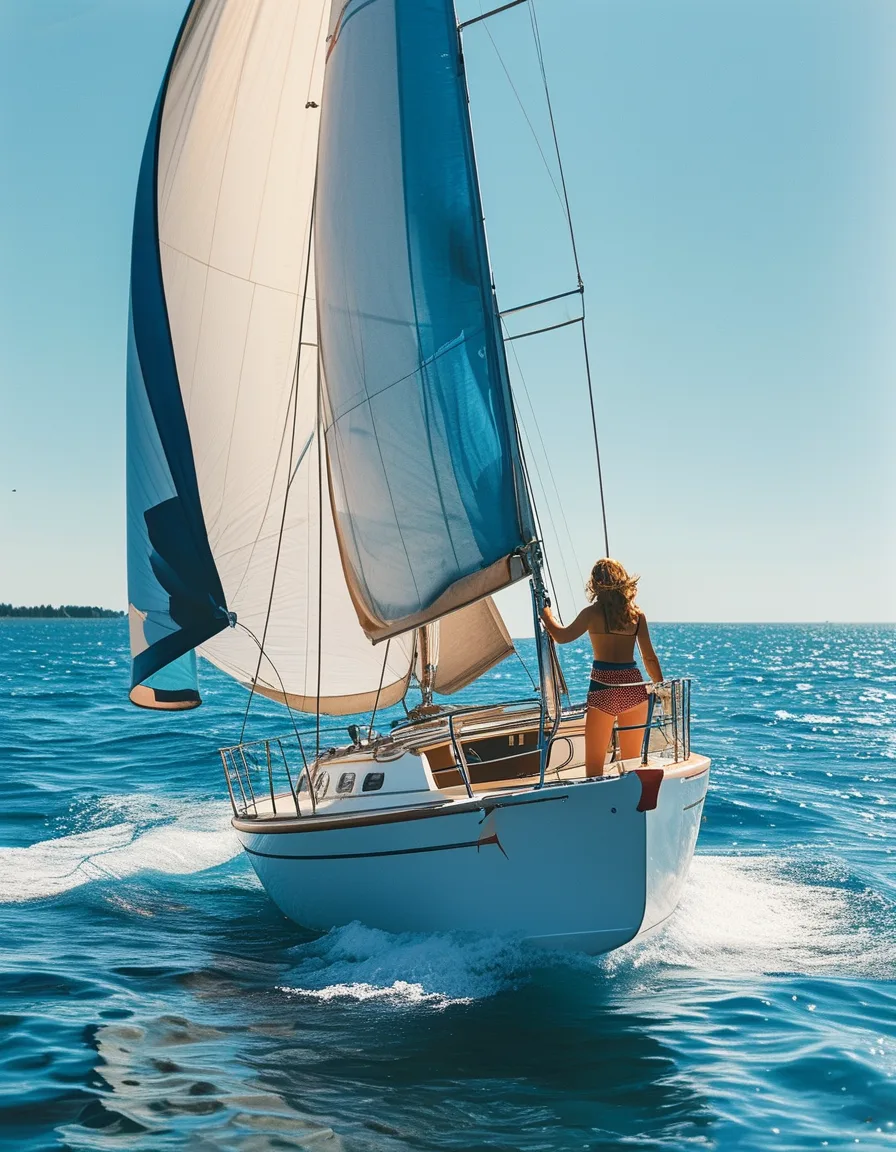
Then the click. The boat heels slightly, the sail stops flapping and takes a clean curved shape, and the whole thing accelerates — silently, with no engine, because you just arranged a piece of fabric correctly against moving air. It’s the closest thing adult life offers to learning to ride a bike again, and most people grin involuntarily.
Expect it to be more athletic than you pictured. Small-boat sailing means hiking out over the side to balance the boat, ducking the boom, moving across a tilting platform, and trimming lines constantly. You will use your core and your grip, and you’ll be pleasantly tired.
Expect to get wet. Expect to capsize eventually, probably in the drill, and to discover it’s genuinely fine.
What Nobody Tells You About Learning to Sail
- You do not need to own a boat. Community center membership plus their fleet covers most people indefinitely. Ownership is a separate and much more expensive hobby.
- Light wind is harder than moderate wind. Beginners hope for a gentle day; drifting in 3 knots teaches nothing and is boring. 8–12 knots is the sweet spot for learning.
- You can’t sail directly into the wind. No boat can. You zigzag toward it in a series of tacks, which is the single concept that makes everything else make sense once it lands.
- It’s a genuinely regulating activity. Water, wind rhythm, and the mandatory attention a moving boat demands add up to the rare environment where your phone is both useless and unwanted. Sailors mention this more than they mention speed.
- The community is the real amenity. Community centers run casual racing, crew boards, and social sails. Show up alone and you will end up on someone’s boat.
FAQ
How long does it take to learn to sail?
A weekend intro course is enough to sail a small dinghy yourself in mild conditions. Real competence — handling stronger wind, docking cleanly, making good tactical decisions — takes a season of regular sailing, roughly 10–20 outings.
Do I need to be a strong swimmer to sail?
You need to be comfortable in water, not fast in it. You’ll wear a life jacket at all times, and the capsize drill is done in a controlled setting with instructors present. Most centers ask for basic water comfort rather than any swimming test.
Is sailing expensive to learn?
Far less than its reputation suggests. Community sailing center intro courses and seasonal memberships are typically a fraction of what private lessons or boat ownership cost, and everything you need — boat, sails, life jacket — comes with it. You supply shoes and sunscreen.
TL;DR:
- Start at a community sailing center with a weekend dinghy course — no experience or gear needed.
- Small boats teach faster than big ones because they give instant feedback.
- Ten words (port, starboard, tack, jibe, boom, sheet, heeling…) unlock nearly all instruction.
- Expect 15 minutes of confusion, then the click when the sail fills and the boat accelerates.
- 8–12 knots is the ideal learning wind, and you never need to own a boat.
Keep Reading
This article is for general informational and styling purposes only. Fit, sizing, and product availability may vary.